Bespoke Rites of Passage
A way of marking significant thresholds in a woman’s life through tailored ceremony.
From the marking of first menstruation and the beginning of the Maiden phase, through to Mother, Queen (around menopause) and on to Wisdom Keeper (Elderhood), a threshold ceremony honours the individual woman as she moves from one life stage to another.
These rites are informed by a cyclical understanding of life, where transitions such as menopause or aging are approached as meaningful thresholds rather than something to be downplayed or endured.
Others are shaped in response to specific life events — such as divorce, empty nest, loss of a loved one, or new beginnings.
Each ceremony is developed in dialogue with the individual, and family & friends where appropriate. The work is grounded in the specifics of the individual woman’s life, rather than drawn from a fixed template.
This offers a meaningful way of marking a milestone birthday or major life transition.
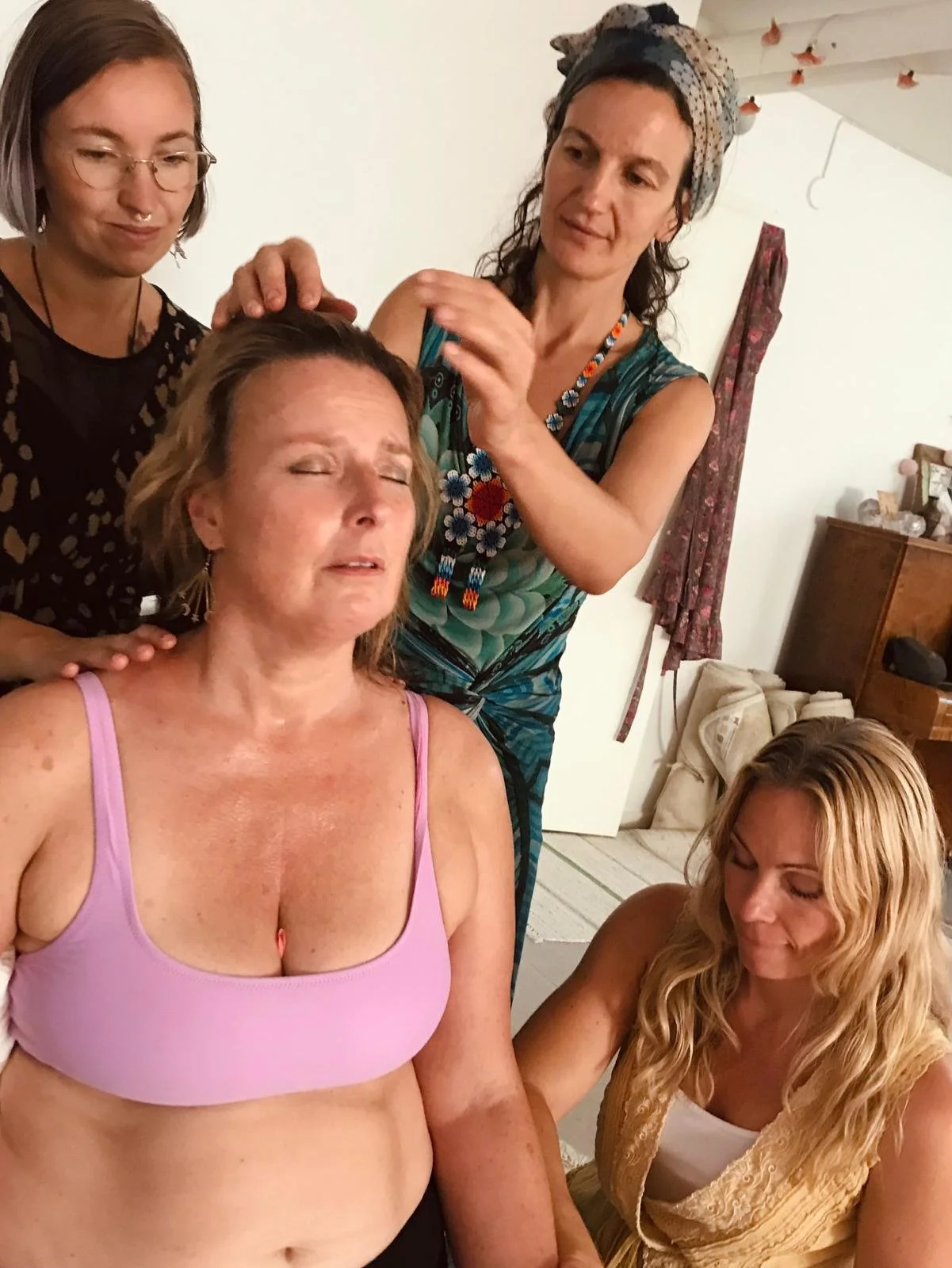
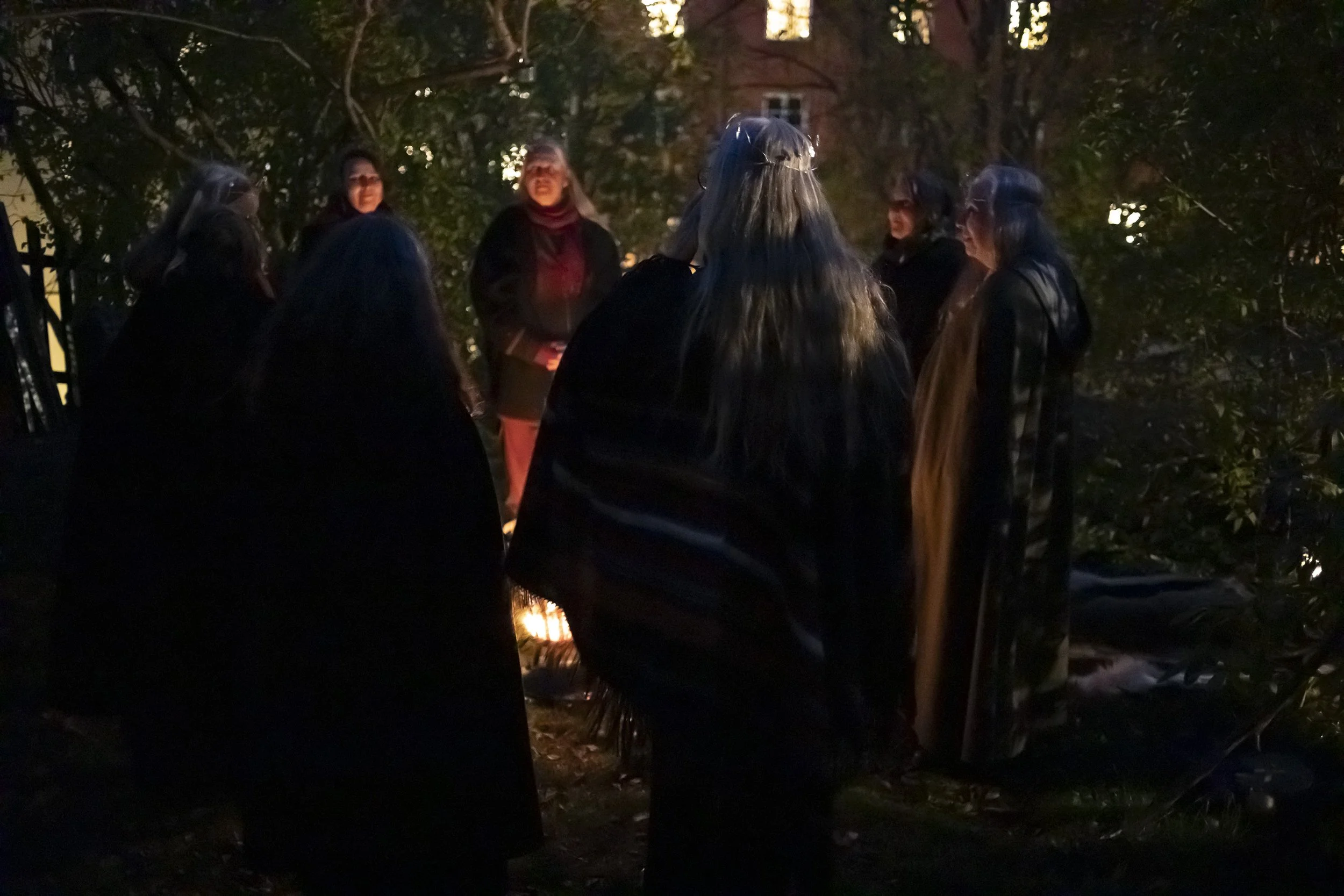
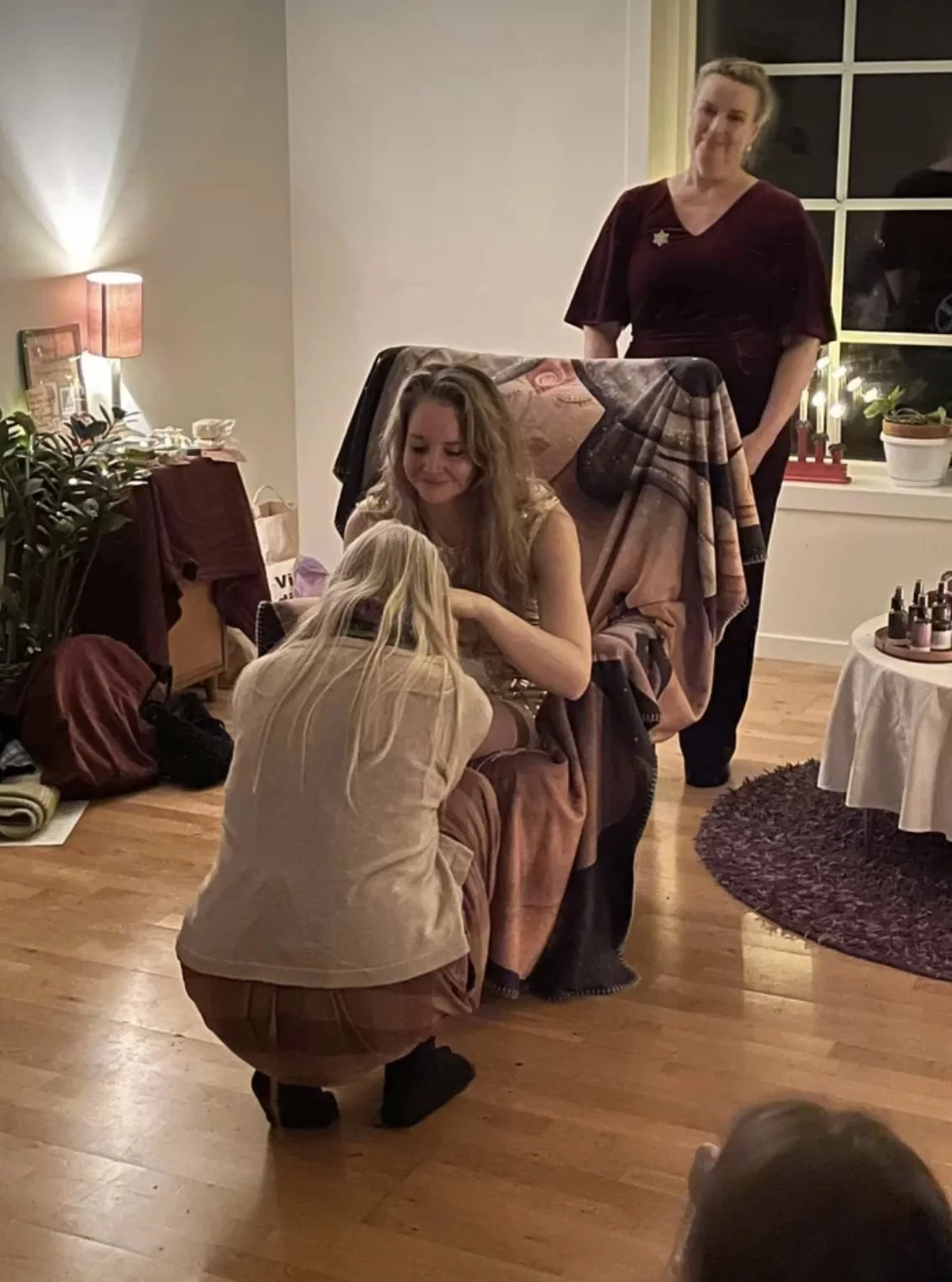
Examples of this work
Wisdom Keeper Ceremony
A rite of passage into the later phase of a woman’s life
A ceremony to mark the transition into the Wisdom Keeper years — a time of integration, discernment, and a different kind of authority.
This rite acknowledges the passage through years of experience, change, and often loss, and honours the woman who now stands with a deeper understanding of herself and the world.
Format
Approximately 3 hours
Tailored to suite your needs and life
In your home or a chosen, private space
One-to-one or small group
Fee
£350
Queen Ceremony
A rite of claiming position, clarity, and standing in your power
A ceremony to mark a moment of standing in the centre of one’s life — in conscious sovereignty.
This phase of a woman’s life is often associated with perimenopause and menopause. It may follow a period of physical and psychological change, or a period of inner reorganisation, where a woman recognises that she is no longer who she was, but has not yet fully stepped into what comes next.
Format
Approximately 3 hours
Tailored to suite your needs and life
In your home or a chosen, private space
One-to-one or small group
Fee
£350, depending on scope and preparation
Menarche Ceremony
A rite of passage marking a girl’s first blood
A ceremony to acknowledge the beginning of a girl’s menstrual cycle, and her entry into a new phase of physical and emotional development. The start of womanhood is often unmarked or minimised, yet it can be recognised and held in a way that brings insight, dignity, and support.
This moment is often treated casually, yet it marks a significant shift in how a young person experiences herself. How first blood is met can have lasting effects, and can influence how she later meets other thresholds such as birth, menopause, and the later years of her life.
Format
Approximately 3 hours
Conversation beforehand with parent/guardian (and girl, if appropriate)
Home or another quiet, familiar space
One-to-one or small, carefully held group
Fee
£350
Wisdom Keeper Ceremony
What this ceremony is
A Wisdom Keeper Initiation marks the transition into the later phase of a woman’s life, often associated with the years beyond menopause.
In many cultures, this was recognised as a movement into a role of insight, steadiness, and perspective: Elderhood. In contemporary life, it’s often left unmarked.
This ceremony restores that recognition.
It creates a space where a woman can consciously acknowledge what she’s lived, what she’s leaving behind, and what she now carries forward.
Each ceremony is shaped in dialogue with you, and tailored to your unique circumstances.
What happens
We begin with a preparatory conversation (30 minutes) to understand what this transition means for you, and shape the ceremony together.
On the day, I arrive in advance to prepare the space.
We start by settling together, through breath, scent, and attention, using carefully prepared botanical oils.
The ceremony may include:
– Reflection on the life that’s been lived
– Naming of thresholds, endings, and turning points
– Symbolic acts of release
– Ritual acknowledgement of lineage and foremothers
– The marking of a new phase, sometimes through crowning or anointing
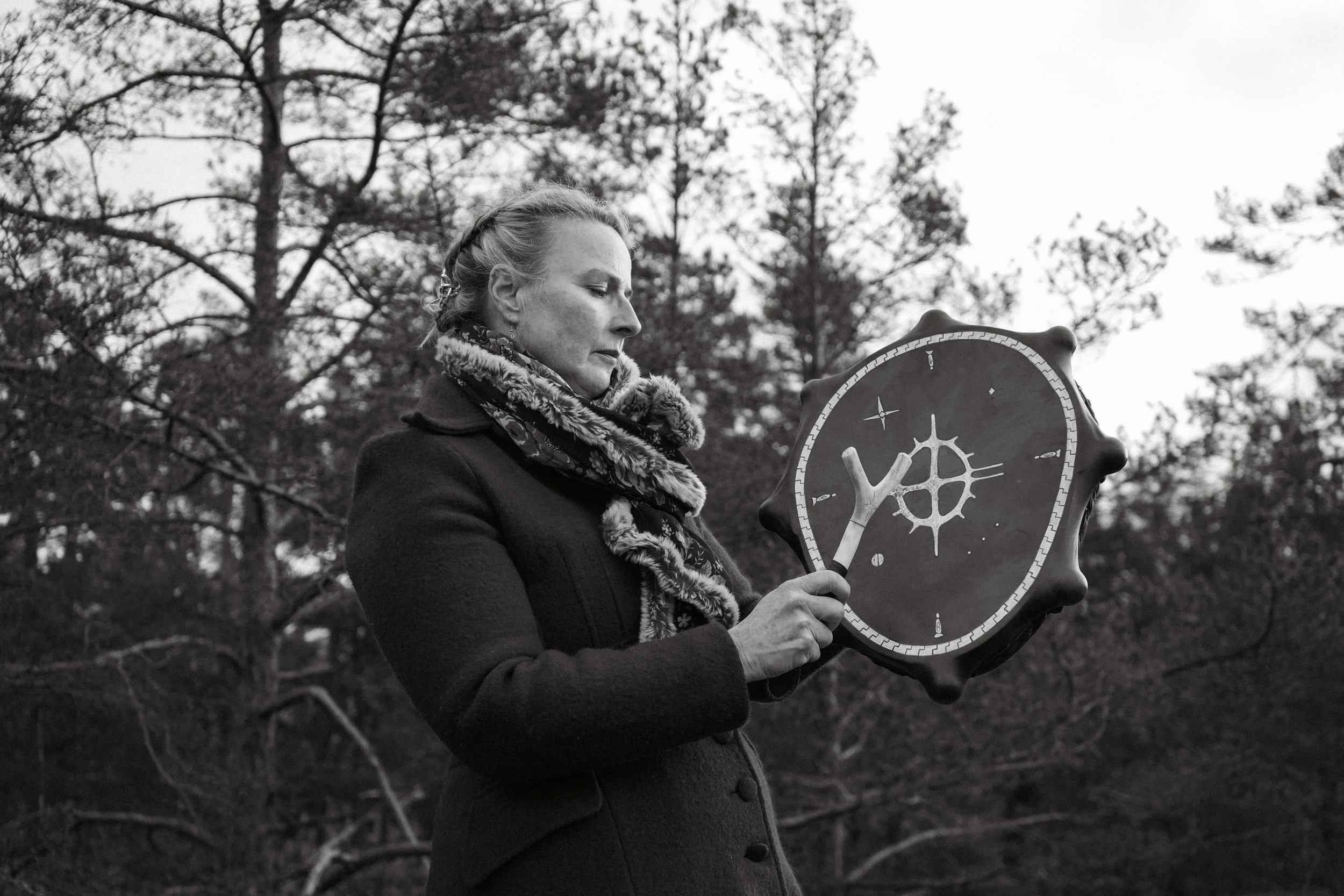
– Song, drumming, and moments of stillness
At a certain point, the woman is invited to step fully into the centre of the ceremony, to be seen and acknowledged in this transition.
The ceremony closes with a clear sense of completion, allowing what’s been marked to be witnessed by her circle.
Why it matters
Transitions that are not marked tend to remain incomplete.
This stage of life is often accompanied by significant shifts — physical, relational, and existential — yet rarely given space or recognition.
A conscious rite of passage allows this to be acknowledged, rather than bypassed.
It offers a way of gathering experience into something that can be lived from, rather than carried unconsciously.
Duration
Approximately 3 hours
Preparation
30 minute conversation beforehand
Setting
Your home or a chosen, private space
Format
One-to-one or small group
Fee
£350
Queen Ceremony
What this ceremony is
A Queen Ceremony marks a shift into a more defined sense of self, responsibility, and direction.
It is a moment where a woman recognises the need to stand differently in her life — in her relationships, her work, or her way of being.
In many traditions, this would be marked and witnessed by the community. In contemporary life, it is often left unspoken.
This ceremony creates a space where that shift can be named, acknowledged, and passed through consciously.
Each ceremony is shaped in dialogue with you, and tailored to your unique circumstances.
What happens
We begin with a preparatory conversation (30 minutes) to understand what this transition means for you, and shape the ceremony together.
On the day, I arrive in advance to prepare the space.
We start by settling together, through breath, scent, and attention, using carefully prepared botanical oils.
The ceremony may include:
– Clarifying what’s being stepped into, and what’s being left behind
– Naming of commitments, boundaries, or intentions
– Symbolic acts of release or declaration
– Ritual acknowledgement of lineage and those who stand behind you
– Marking of position, sometimes through crowning, or anointing
– Song, drumming, and moments of stillness
At a certain point, the woman is invited to step into the centre of the ceremony and be witnessed in that position — as recognition of who she now is.
The ceremony closes with a clear sense of orientation, allowing what’s been named to settle into lived reality.
Why it matters
There are moments in life when something has already changed internally, but has not yet been fully lived.
Without recognition, these moments can remain uncertain or fragmented.
A conscious rite of passage allows a woman to step into her life with greater clarity and sovereignity — not by becoming something else, but by standing more fully in what she already knows.
Duration
Approximately 3 hours
Preparation
30 minute conversation beforehand
Setting
Your home, or a chosen private space
Format
One-to-one or small group
Fee
£350
Menarche Ceremony
What this ceremony is
A Menarche Ceremony offers a way of recognising first menstruation as a meaningful threshold, rather than something to be hidden, minimised, or medicalised.
It creates a simple, grounded space where the girl can be supported, guided, and gently introduced to what this change means. The process is carefully held and appropriate to the age and readiness of the girl.
Depending on age and preference, the ceremony may be held one-to-one, with a parent present, or within a small and carefully chosen circle.
Each ceremony is shaped in dialogue with the girl and her parent or guardian, ensuring that it feels appropriate, respectful, and safe.
What happens
We begin with a preparatory conversation with the parent or guardian (and, where appropriate, the girl) to understand what’s needed and how the ceremony should be shaped.
On the day, I prepare a quiet and supportive space.
We begin by settling together, through simple grounding practices, breath, and attention.
The ceremony may include:
– Age-appropriate conversation about the body, menstruation, and cyclical change
– Space for questions and reflection
– Gentle symbolic acts to mark the transition
– Acknowledgement of the women who came before her, and the experience she shares with all women
– Simple ritual elements such as lighting a candle, offering words, or creating a small object to keep
If held within a small circle, those present may offer brief words of support or acknowledgement.
The tone remains gentle, respectful, and appropriate to the age and readiness of the girl.
The ceremony closes simply, allowing the experience to settle naturally.
Why it matters
A girl’s first period is often her first direct encounter with her changing body.
How this moment is met can shape her relationship to her body for years to come.
A conscious rite of passage offers a different starting point — one that’s grounded, informed, and free from shame.
It allows the experience to be recognised and seen as a source of vitality.
Duration
Approximately 3 hours
Preparation
Conversation beforehand with parent/guardian (and girl, if appropriate)
Setting
Home or another quiet, familiar space
Format
One-to-one or small, carefully held group
Fee
£350
Contact me about Bespoke Rites of Passage
Please get in touch via the contact form to discuss context, timing, and suitability.